Review: ‘Do Us Part’ Understands That Sometimes the Real Love Story Is the Friendship That Survives
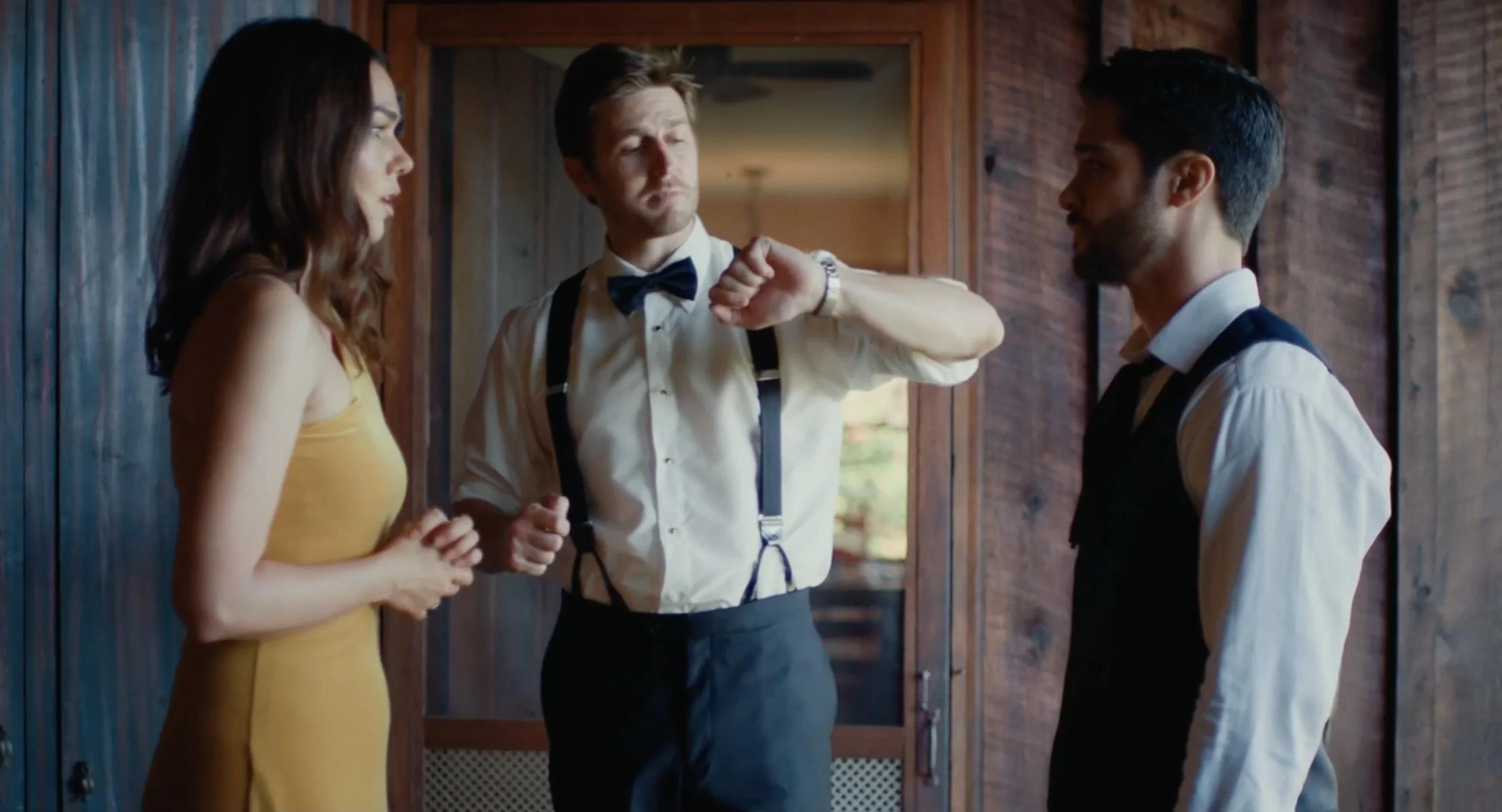
There comes a point in your twenties when weddings stop feeling like fairy tales and start feeling like reunions with every version of yourself you’ve left behind. Old friends resurface. Conversations pick up where they left off years earlier. Regrets suddenly feel louder than the music. Do Us Part understands that feeling better than it understands romance, and that’s exactly what makes it unexpectedly affecting.
On paper, Reed Arnold’s feature debut doesn’t sound like it’s venturing into unfamiliar territory. A wedding. A last-minute confession. A group of friends forced to confront feelings that should have stayed buried. The ingredients are comfortably familiar, and Arnold never pretends otherwise. Instead of chasing reinvention, he leans into sincerity, trusting that recognizable emotions can still feel fresh when they’re spoken honestly.
The film’s greatest sleight of hand is convincing you it’s about a love triangle (square?) before quietly revealing it’s about something far more difficult to hold onto: friendship.
That distinction matters.
Romantic comedies often reduce relationships to a finish line, asking audiences to choose a side before rewarding one couple with a kiss and rolling credits. Do Us Part is more interested in the emotional collateral that comes with growing older. Love complicates these characters’ lives, certainly, but friendship is what defines them. Years of shared history, inside jokes, unresolved hurt, and unspoken secrets carry far more weight than the question of who ends up with whom.
It’s a surprisingly mature perspective for a film that never loses its sense of humor.
Arnold, who also stars as Mark, gives the film its comic heartbeat. His performance slips effortlessly between sarcasm and sincerity, often arriving with exactly the right joke before a scene threatens to become too sentimental. It’s an effortlessly charismatic performance and, fittingly, the film’s most memorable one.
That chemistry extends across the entire ensemble. There’s an ease between the actors that can’t be manufactured, the kind that makes years of friendship believable before the screenplay ever has to explain it. Much of that can likely be traced back to the project’s theatrical origins. Adapted from Arnold’s own stage play, Do Us Part doesn’t hide where it came from. Many of its strongest scenes are simply two people occupying the same space, allowing conversation, silence, and performance to carry the emotional weight. In lesser hands, those moments might feel static. Here, they feel intimate.
The film is equally confident in knowing when not to show its hand. One particularly inspired decision (one best left unspoiled) reframes a central relationship in its closing moments and transforms what could have been a conventional romantic payoff into something quieter, wiser, and considerably more satisfying. It’s the rare ending that doesn’t ask audiences to celebrate a winner. Instead, it asks them to appreciate the grace required to let complicated emotions exist without forcing them into tidy resolutions.
That emotional intelligence is helped along by a screenplay that speaks the language of its generation. Pop culture references, from Taylor Swift to When Harry Met Sally, don’t feel like obligatory nods to modern audiences; they’re woven into the way these characters process their lives.
If the film occasionally stumbles, it’s because its confidence in emotional familiarity can border on narrative familiarity. Certain story beats announce themselves well before they arrive, and Ryan’s unwavering optimism sometimes pushes beyond endearing into frustratingly passive. There are also moments where the film’s stage-play DNA becomes impossible to ignore, favoring conversation over cinematic movement. Whether that’s a limitation or part of its charm will likely depend on the viewer.
Still, it’s difficult to begrudge a film for wearing its heart this openly.
For all its romantic entanglements, Do Us Part lingers most in the quiet spaces after the confessions: the conversations that aren’t about winning someone back but about understanding each other a little better than before. That’s a rarer sentiment than the film initially lets on.
Do Us Part won’t redefine the romantic comedy, nor does it aspire to. What it offers instead is something smaller, warmer and arguably more enduring: a reminder that some of life’s most meaningful relationships aren’t measured by who we fall in love with, but by the people who continue to know and love us after so many years.