Madonna’s Confessions II; Back Where the Beat Belongs
POP TINGZ RATING
8/10
Twenty-one years after Confessions on a Dance Floor forever redefined dance-pop, Madonna returns to the mirrorball with Confessions Part II, her fifteenth studio album and first full-length release in seven years. Reuniting with Stuart Price, the architect behind the original Confessions, Madonna revisits the house music that has long served as both her playground and her sanctuary. Rather than attempting to recreate the past, she expands upon it, delivering sixteen house-driven tracks that flow seamlessly into one another like a late-night DJ set.
In an era where albums are increasingly built around bite-sized moments designed to dominate social media, Confessions Part II feels refreshingly unconcerned with algorithms. Nearly every track stretches to around four minutes, allowing songs to breathe, evolve, and build naturally. The record is less interested in producing viral snippets than sustaining atmosphere, something Madonna has always understood better than most of her contemporaries.
Nothing here reaches the cultural peak of "Hung Up," the ABBA-sampling masterpiece that anchored the first Confessions. Few dance songs ever have. But comparing the two albums solely through that lens undersells what Madonna accomplishes here. Rather than chasing another career-defining single, she crafts a remarkably cohesive dance record that reconnects her with the club culture that shaped both her career and identity.
The album opens with "I Feel So Free," immediately establishing that connection. Sampling Chicago house pioneer Lil Louis, the track slowly unfolds through shimmering synths and spacious production as Madonna whispers, "Sometimes I just like to hide in the shadows... create a new persona, a different identity, I can be whoever I want to be." It is a fitting introduction. Throughout the album, Madonna continually blurs the line between the icon the world knows and the woman behind it.
That liberation continues across "Good For The Soul" and "One Step Away," where Stuart Price's production favors patient builds over instant gratification. Detroit house influences pulse beneath the surface, allowing the grooves to develop gradually rather than explode immediately.
"Bring Your Love," featuring Sabrina Carpenter, samples Inner City's Good Life while delivering one of the album's clearest artistic statements. "Don't comment on my ideas / I don't want your judgement or your expectations / Don't wind me up like a toy / Your vision of me is a killer of joy." It is Madonna rejecting the expectations that have followed her for four decades. Carpenter's presence feels surprisingly restrained, allowing Madonna's message to remain firmly at the forefront.
The album reaches one of its most joyful moments with "Danceteria." Named after the legendary Manhattan nightclub where Madonna's career first began to take shape, the song functions as both celebration and history lesson. Echoing the spoken roll calls of "Vogue," she namechecks figures such as Keith Haring, Jean-Michel Basquiat, and Fab Five Freddy over a strutting house groove that practically demands movement. Co-produced by Andrew Watt and Cirkut, it captures the sweaty energy of downtown New York while reminding listeners that Madonna was never merely documenting club culture. She helped define it.
"Read My Lips" shifts toward brighter territory, pairing Spanish guitar flourishes with breezy summer production. It has all the ingredients of an effortless dance-pop hit, although Feid's contribution feels more obligatory than essential.
The middle portion of the album continues to prioritize momentum over individual spectacle. Tracks like "Everything" and "Love Sensation" keep the mix moving through filtered house grooves, while "Love Without Words" experiments with chopped vocal manipulations and elastic synth textures. By this point, however, the record begins revealing its only significant weakness. Sixteen tracks occasionally prove one or two songs too many, and certain production ideas begin resurfacing without offering enough variation to justify their length.
That momentum is restored with "Bizarre," featuring Martin Garrix. Driven by snapping percussion, dark club textures, and flashes of Eurythmics-inspired synth-pop, the song steadily escalates into one of the album's biggest dancefloor moments. "Who knew love could be so bizarre?" lands somewhere between resignation and exhilaration, perfectly capturing the emotional contradictions that define much of the record.
The transition into the album's closing act reveals an entirely different Madonna.
Beginning with "Fragile," an acoustic guitar-led rave ballad written as a tribute to her late brother Christopher, the album gradually leaves the nightclub behind in favor of something far more intimate. Rather than abandoning the electronic palette, Madonna softens it, allowing emotion to occupy the foreground.
That introspection deepens on "My Sins Are My Savior" with Stromae before reaching one of the album's emotional peaks on "Betrayal." Built around an interpolation of Erik Satie's Gnossienne No. 1, jazzy trumpet passages, and understated trip-hop production, the song appears to reflect on the loss of her stepmother, Joan Ciccone. It is elegant, restrained, and among the most affecting performances Madonna has delivered in years.
Perhaps the album's most personal moment arrives with "The Test," a duet with her daughter Lourdes Leon. Trance-inspired production intertwines with delicate xylophone flourishes as Madonna reflects on motherhood itself. "You didn't ask for all the flashing lights / I didn't think of how it could disturb." After decades of cultivating one of pop music's most carefully constructed public personas, hearing Madonna acknowledge the cost of that fame through the eyes of her daughter carries surprising emotional weight.
The album closes gently with "LES Girl," where breezy guitar arrangements accompany memories of an early crush on a guitar-playing boy from New York's Lower East Side. It feels less like nostalgia than acceptance, bringing the album full circle.
What ultimately distinguishes Confessions Part II from much of Madonna's recent work is its confidence. There is remarkably little sense that she is chasing contemporary trends or attempting to reclaim commercial dominance. Instead, she returns to the dancefloor because it remains the place where she has always spoken most honestly. Here, dancing is never simply escapism. It is therapy, memory, grief, freedom, and self-discovery.
The album is not flawless. Its sixteen-track runtime occasionally stretches beyond what its ideas can comfortably sustain, and a tighter edit would have strengthened its impact. Yet its final stretch is so unexpectedly vulnerable that it almost feels like a second album emerging from within the first.
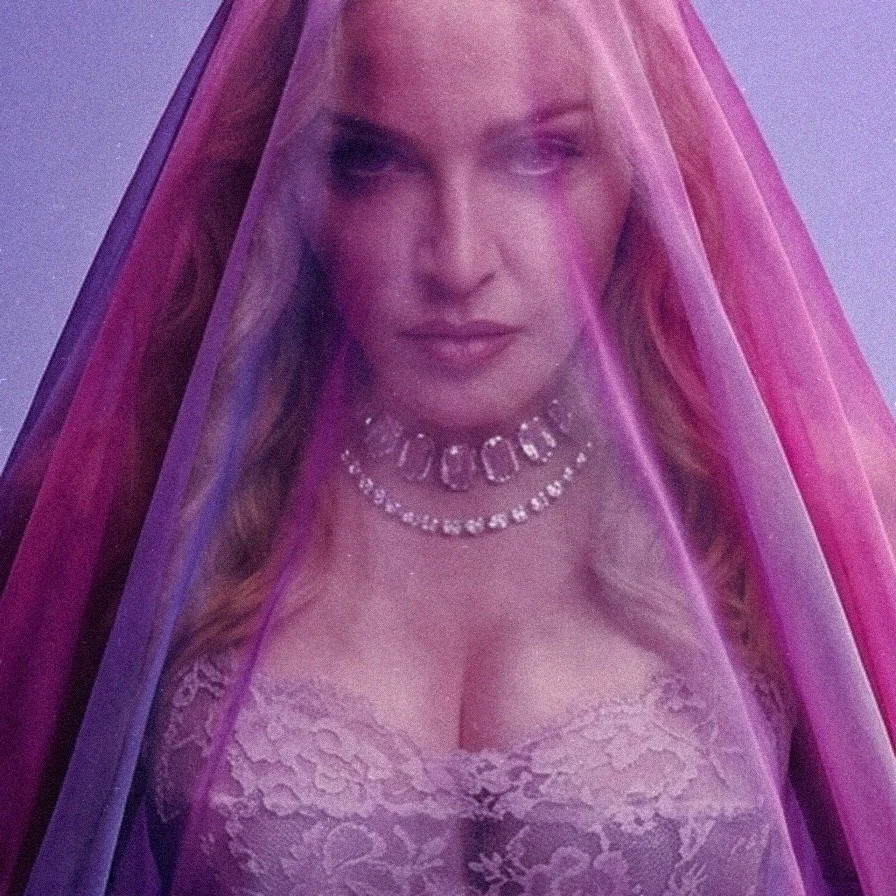
Madonna begins Confessions Part II craving anonymity, hiding beneath different identities and personas. By its conclusion, that veil has quietly disappeared. What remains is perhaps the closest listeners have come to hearing Madonna herself.
More than forty years into one of pop music's most influential careers, it is remarkable that she can still produce an album this vibrant, this self-assured, and this invested in pushing herself forward. Confessions Part II may not surpass its legendary predecessor, but it comfortably stands as Madonna's strongest work since.
For an artist whose career has already rewritten the history books, that is an achievement in itself.