RAYE’s THIS MUSIC MAY CONTAIN HOPE.; A Maximalist Masterclass in Modern Melodrama
POP TINGZ RATING
9.2/10
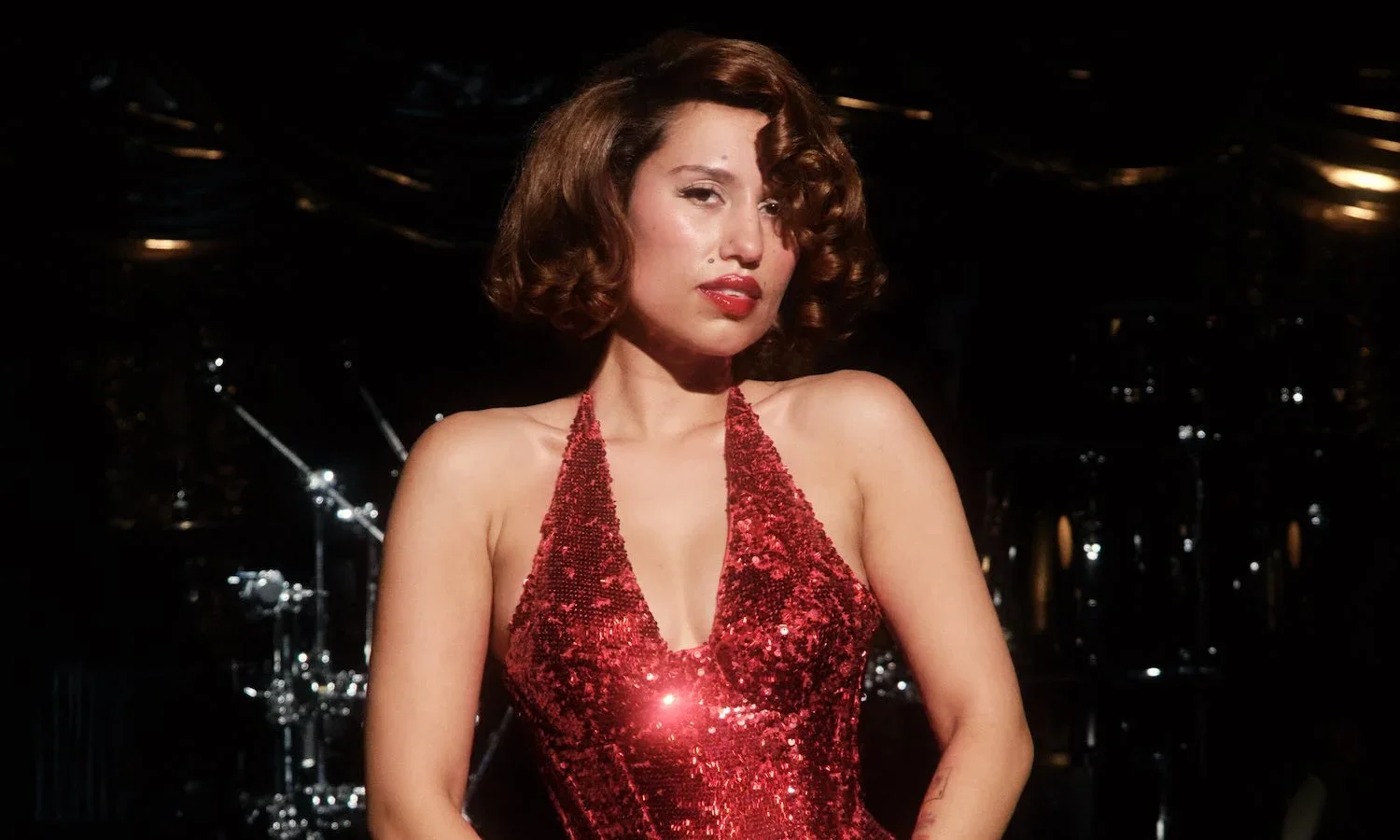
With her second studio album, the sprawling 17-track THIS MUSIC MAY CONTAIN HOPE., RAYE delivers something far beyond the confines of a traditional pop record. It is a theatrical, almost cinematic body of work that feels less like a playlist and more like a staged musical, a diaristic performance unfolding in real time. Written entirely by RAYE herself, the album leans fully into her singular artistic identity: jazz-pop maximalism infused with spoken word, orchestral flourishes, and deeply personal storytelling. Few contemporary artists would dare construct an album this way. Fewer still could pull it off.
Clocking in at over an hour, the record is unapologetically expansive. It is, undeniably, a lot. Yet its ambition is precisely what makes it so compelling. RAYE’s lyricism is intentionally imperfect; beautifully clunky, often feeling like near-symbolic poetry interrupted by intimate spoken reflections. Those narrative fragments, peppered throughout the album, create a sense that the listener is watching rather than merely hearing the music unfold. It’s a show, a chronicle of the life she’s lived, the heartbreak she’s endured, and the hope she’s fought to retain.
The Intro immediately establishes this theatrical framework. Over sweeping cinematic strings, we meet “a woman in her late twenties” walking alone from a bar to her hotel room. It feels like the opening scene of a film, grounding the listener in RAYE’s world before the emotional drama begins.
“I Will Overcome.” is among the album’s defining statements. Anchored by orchestral swells, RAYE sings, “this is my song to remind me, I needed one,” delivering a declaration of resilience that feels hard-earned rather than aspirational. The line “and it’s funny, some people say I remind them of Amy” nods subtly to Amy Winehouse. The song crescendos into a cinematic climax, reaffirming the album’s central theme: hope as survival.
The theatricality continues with “Beware.. The South London Lover Boy,” a jazzy, doo-wop-inflected number that feels plucked from a Broadway stage. “Girls stay safe out there, best you stay prepared,” she warns, delivering both humor and caution in equal measure. The Chicago-inspired claps and vintage arrangement reinforce the album’s constant dialogue with musical history.
Narrative storytelling reaches new heights on “The Whatsapp Shakespeare,” where RAYE frames modern romance as classical tragedy. “As he lured me like a lamb to the slaughter,” she sings, before the track unexpectedly dissolves into a burlesque-style jazz interlude, the sonic equivalent of stage lights dimming mid-performance.
“Winter Woman” blends contemporary production with classical instrumentation, featuring warped vocal repetitions and even a rap verse that subtly echoes the emotional landscape of her 2023 hit Escapism. But it is “Click Clack Symphony (ft. Hans Zimmer)” that truly demonstrates the album’s audacity. Zimmer’s orchestral fingerprints are unmistakable; the track swells into something monumental, transforming the simple act of getting ready for a night out into a heroic journey. The rhythmic clicking of heels becomes percussion, reinforcing the album’s theatrical sensibility.
Empathy becomes central on “I Know You’re Hurting,” where RAYE extends compassion outward. “If you need two more arms to hold these burdens,” she offers, her voice soaring with a grandeur reminiscent of David Bowie’s Heroes. Meanwhile, “Life Boat” channels the emotional catharsis of Fred again..-style House electronic music, layering affirmations of perseverance over bright, rave-adjacent production: “I’m not giving up yet.” It is both deeply personal and universally resonant.
Humor and vulnerability intertwine on “I Hate The Way I Look Today,” a 1940s bebop-inspired piece filled with scatting, saxophones, and theatrical flair. The song’s self-conscious insecurity gradually transforms into self-acceptance, embodying the album’s broader emotional arc.
The American soul influences become clear on “Goodbye Henry” featuring the legendary Al Green, a tender breakup narrative that avoids bitterness in favor of grace. “Maybe one day we could try again,” she sings, allowing complexity rather than closure.
Later tracks deepen the emotional palette. “Skin & Bones” dissects the exhaustion of being desired only superficially, while her hit “WHERE IS MY HUSBAND” leans into swaggering soul. “Fields,” featuring her grandfather stands as one of the album’s most moving moments, a letter to her grandfather, complete with a voice message from the man himself. The intergenerational connection reinforces RAYE’s sense of artistic lineage, positioning songwriting as inheritance.
Moments of lightness arrive with “Joy” featuring her sisters, while “Happier Times Ahead” blends piano-driven melancholy with early-2000s Lily Allen and Amy Winehouse sensibilities. The album concludes with “Fin,” a theatrical curtain call in which RAYE directly addresses the listener, describing the record as “a musical hug and orchestral kiss.” She thanks every collaborator by name (for a whopping four minutes), ending with the quiet but powerful reminder: “hope must always exist.”
THIS MUSIC MAY CONTAIN HOPE. is a dazzling jazz-pop odyssey that oscillates between messiness and optimism, theatrical spectacle and diaristic intimacy. It feels almost radical in today’s risk-averse pop landscape, an album unconcerned with algorithms or virality, committed instead to emotional catharsis and artistic ambition.
At times, it may feel overwhelming. The sheer scale of its orchestration and narrative ambition means not every moment lands with equal clarity. Yet that excess is part of the project’s identity. It is intentionally maximalist, a reminder that art can still feel expansive in an era that often favors restraint. The album’s title proves prophetic. Every song contains some fragment of hope, whether whispered, sung, or shouted through cinematic strings. In a musical climate that often rewards safety, RAYE has created something boldly vulnerable yet larger-than-life.
And that is precisely what makes this album extraordinary.